

Requiem
At the stroke of midnight on December 31, 2025, MTV aired its final broadcast of music videos before going off the air forever. Like most people above 30, I hadn't watched MTV or really even thought about it for ~15 years. The finality of its official demise however triggered pangs of nostalgia for the medium that catalyzed my interest in music as a kid.
Before the Internet, MTV was a one-stop shop for listening to pop, rock, hip-hop and electronic music. With the music video, artists were no longer disembodied voices on the radio. Art direction, looks and personality could now play a part in how musical acts were perceived and evaluated. The first CDs I ever owned were The Prodigy’s Fat of the Land (1997) and Garbage’s Version 2.0 (1998). I was sold on them both by the videos I watched. The crack-house grime of ‘Breathe’ and the surreal sci-fi of ‘Push It’ were the coolest things that a 13-year old me had ever seen.
GARBAGE - PUSH IT (1998)
MTV is often remembered for terrible reality shows. For vapid culture. For corrupting the youth behind a veil of corporate-friendly branding. For a generation of joyless curmudgeons, its legacy is thus. But without MTV (or its many global competitor channels), the music video would never have been popularized.
Music videos have their own artistic merit that was wholly independent of MTV's relentless brand-building through its gaudy awards shows, VJ cults and hollow cultural landmarks like Cribs and Punk'd. I wanted to be able to archive that experience somewhow, in a format other than lifeless MP4 files in a folder I'd never visit.
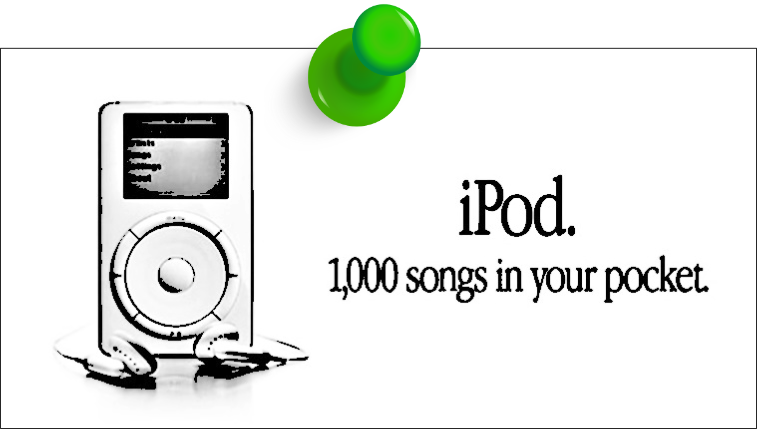
By the mid-2000s, the idea of music videos as a sales funnel entered its death throes. Most became too time-consuming and cost-prohibitive to produce. People were spending less time watching TV and more on their computers, where songs could be obtained for $1 apiece if you were scrupulous, and gratis if you weren’t.
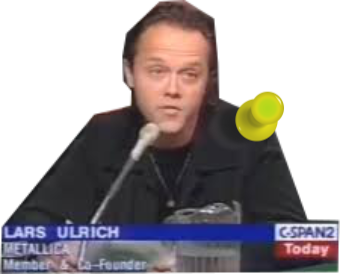
Charging $18.99 for an 11-song CD was what made music videos worth the expense. By 2005, that assumption no longer held, not least because the CD as a format was rapidly losing ground to MP3 players that stored a hundred CD wallets' worth of music and didn’t skip if you moved at any pace above a brisk stroll. They were cheap, convenient and portable; selling points that no amount of Congressional testimonies about the ills of piracy were going to change.
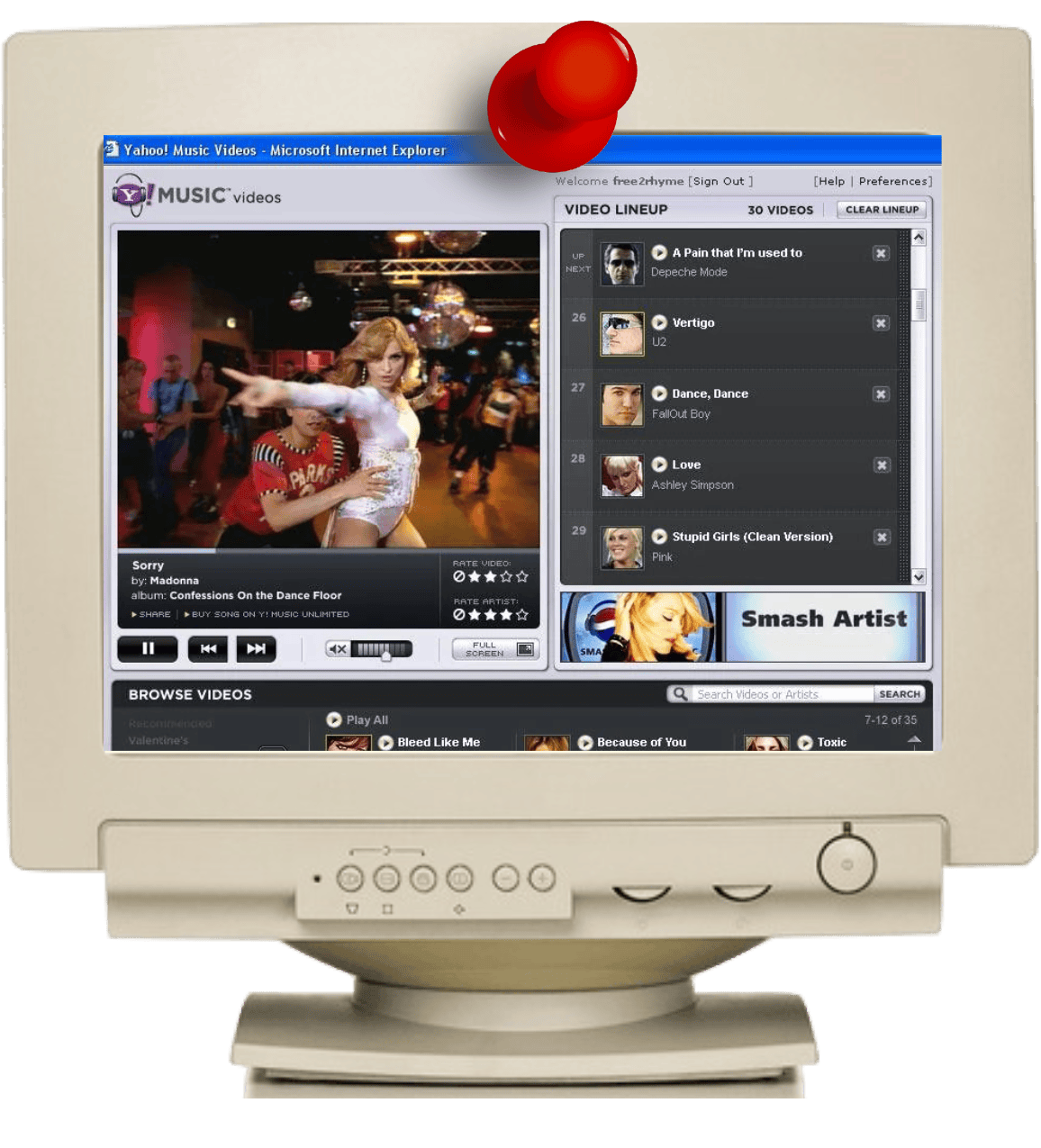
With music videos floating around Limewire and on nascent on-demand video streaming platforms (Yahoo! Music anyone?), MTV itself changed its strategy to pivot towards reality TV programming that guaranteed eyeballs and had low production costs to boot. While it had dipped its toes into that arena as far back as the early ‘90s with "The Real World", it went all-in in the 2000s with "The Hills", "16 and Pregnant" and other lowest common denominator brainrot that served to hammer more nails into the coffin of 24/7 music videos.
I'm using "MTV" interchangeably with '90s music video channels around the world, all of which apear to be in terminal decline.



I won’t dwell on this portion of its history, but it is worth noting that from 2016 to year-end 2025, MTV did have separate channels dedicated to music videos from its golden era.



This was as close as we could get to the experience of watching MTV in the ‘90s and early 2000s....until ErsatzTV let me do it myself.
SETTING UP
STEP #1



Rip DVDs from my Collection
Step #1 Details
Ripping DVDs can be surprisingly buggy. The ones MakeMKV can't detect can usually be ripped by VLC, but it might miss a chapter here and there. Sometimes VLC will do a run-through and end up generating a 1-hour loop of the DVD menu. Surprisingly unreliable considering that the copy protection on music video DVDs is usually 20+ years old.
STEP #2

Import video folders to create
channels + Schedules,
automatically saved to M3U and XML
Step #2 Details
Absurdly customizable. Can be as simple as making every folder a 24/7 channel on shuffle, or as complex as creating programming for every hour of the day, or channels that only play on weekend evenings, and can insert downloaded commercials or "filler material" in between videos.
STEP #3


Kodi Media Center provides the UI for browsing channels; the Kodi add-on Simple IPTV Client imports the M3U and XML URLs generated by ErsatzTV .
Step #3 Details
Using Kodi and setting the channel video transcode option to "HLS Direct" reduced load time when switching channels to 1-2 seconds; VLC was similarly fast, although its utilitarian UI is decidedly not TV-like. On Jellyfin (MacOS), the delay was 15-45 seconds no matter which transcode setting I used.
RESULTS
(slightly sped up as I was taking too long to change channels while filming)
What I have is perfect for my needs -- a collection of roughly 1200 music videos of all genres split across 3 channels, each capturing a period of MTV I grew up with in the 90s and early 2000s:

Yes, the logos were AI-generated. Copilot throws up a login wall after 3 images, which was just as well.
Nine Inch Nails - Closer (1994)
Just like TV channels, I can flip through these and catch a video playing halfway through. The serendipity of re-discovery is important here; I regularly come across videos I haven't seen in over 20 years; Ash's 'Shining Light'; Bjork's "Cocoon", which barely got any airplay due to some light nudity; I was lucky to catch it on TV when I did.
At times, it feels like a bittersweet snapshot of how I experienced the world at that time. There is a certain melancholy associated with that, as some songs no longer mean what they did to me then; that phase of my life is over.
Michael & Janet Jackson - Scream (1995)
OK Go - Here it Goes Again (2005)
The rush of nostalgia I feel watching it is extremely powerful. In the golden days of 90s and early 2000s TV, there was still too much novelty for me to not turn it on every day for a couple of hours. Maybe I was too young to see the end of MTV coming; i went off to college in 2004 and after that there simply wasn't enough time to watch TV, so we stuck to DVDs, Torrents and eventually Youtube.
I seemed to have hit the ejector seat button just in time. Most music video compilation DVDs I own cut off at around 2005, just before the TV-wide terminal descent into reality TV. OK Go's 2005 video heralded the end; a clever low-budget home made video concepts instead of big-budget ones with cinematic flourishes like say, Michael and Janet Jackson's "Scream" (1995), estimated to have cost $30 million.
MUSIC VIDEOS AS AN ART FORM
There was once a time when it was possible for authors and artists to maintain an air of mystery about who they were. What you saw was what you got and you often only got it after lengthy intervals of silence. A music video, a print interview, some meager factoids in an episode of Pop-Up Video, and that was pretty much it. The best videos stuck in my mind like an industrial strength adhesive; I committed them all to memory because I didn't know when I'd see them again.
UNDERWORLD - DARK TRAIN (1994)

George Michael - Fastlove (1996) 🔗
This futuristic video almost perfectly predicted the emergence of app-based online dating 15 years before it happened. Cycle through potential partners at the touch of a button. Of course, George Michael has a hundred matches to choose from.
Pulp - Bad Cover Version (2002) 🔗
Spoofing the star-studded Live Aid concert of 1985, Pulp hired impersonators of famous bands to sing their new single from the 'We Love Life' record. While the studio track has frontman Jarvis Cocker's Bowie-esque vocals, the impersonators really do sound like their namesakes in the video. A lighthearted way to return to the airwaves after the obsessively downcast This is Hardcore record cemented their reign as the thinking man's Britpop band, but cost them their mainstream appeal.
Eighties Matchbox B-Line Disaster - Psychosis Safari (2002) 🔗
At a time when garage revival bands were trying their damndest to give their videos a tepid simulacrum of '70s NYC punk authenticity (cough cough, The Strokes), UK band the Eighties Matchbox took the opposite route, wearing bell bottoms and crafting a look that resembled a low-budget horror film to accompany their psychobilly thrash sound.
U2 - Lemon (1993) 🔗
Drawing heavily from Eadward Muybridge's The Horse in Motion from 1878, U2 tries a new look to accompany the shimmering Kraftwerkian synths on their new single. It was a far cry from the anthemic rockers and tearjerker ballads they usually put out as singles, but '90s U2 were nothing if not experimental. Paul Oakenfold's Perfecto remix of this song did very well to get their music into clubs. This would be last time we'd see Bono before those ridiculous wraparound shades would fuse to his skin permanently.
The Prodigy - Smack my Bitch Up (1997) 🔗
The most destructive depiction of an all-night bacchanal ever committed to tape, SMBU was the perfect visual accompaniment for a record that introduced big beat techno to the world as an uncaged beast snarling with distended acid breaks and thunderous doooof dooof drums. Due to its scenes of drug use (and boobs), it was banned from airing everywhere but its native UK, where it could air only after 2AM. Directed by Jonas Åkerlund, its first-person POV almost certainly influenced the seminal UK sitcom Peep Show, which featured a failed techno musician as one of its main characters.
Kylie Minogue - Confide in Me (1994) 🔗
A surprise choice for a lead single, CIM presented a more downcast, grown-up image of the Aussie dance-pop star, who would have a hit the following year with compatriot and grumpy alt-rocker Nick Cave on 'Where the Wild Roses Grow'. CIM's music video depicts a touchscreen-based video romance service inspired by VHS video dating tapes and late-night phone sex hotlines, a choice that goes nicely with the song's unsettling string melody and haunting chorus.
Bjork - All is Full of Love (1999) 🔗
The original '97 album version was a haunting paean with minimal instrumentation besides reverbed strings and a chorus that sounded like a religious chant. The single version, remixed by Mark Stent added a futuristic trip-hop sheen, and director Chris Cunningham took it even further with this stunning special effects-laden video. A perfect metaphor for the Y2K-aided pre-millennium tension we all felt in '99. I remember thinking about this video for days after I first saw it; it's still one of the only ones to be displayed at the MOMA in New York.
Smashing Pumpkins - Stand Inside Your Love (2000) 🔗
When you think high-concept videos from SP, you probably think of 1996's 'Tonight, Tonight' which was made in the puppetry-heavy style of the 1902 French silent film 'Le Voyage dans la Lune'. The old-timey theatricality was not incidental, as the videos for 'Zero' (1995) and SIYL would prove. Based on Oscar Wilde's 1892 play Salomé, the band plays instruments clad in highly stylized, flowing garments as the play's titular character attempts to seduce the monstrous-looking Jokanaan.
Weezer - Buddy Holly (1994) 🔗
I first saw this video in 1995 and genuinely did not hear anything else from them until 2001 when they returned from hiatus. In the pre-Internet age, there was almost no way to know what happened to a band once their videos went off the air. This spoof of Happy Days' 1950s nostalgia matched the song's "grunge Beach Boys" sound perfectly. The video concept was the brainchild of director Spike Jonze, who would also shoot the equally creative video for the Beastie Boys' 'Sabotage' that same year. Did you know that he also directed no less than NINE Jackass movies? Or that a copy of the Buddy Holly video was packaged with the installation CD for Windows 95? Speaking of which....
SOME FORM OF ARCHIVAL IS NECESSARY
Compiling my video collection into ErsatzTV channels solves a problem; archival-wise, there aren't many options to do this besides Youtube, and that too isn't a permanent solution considering the risks of automated DMCA takedowns, licensing changes, and good ol' linkrot. DVD compilations were only possible for a small fraction of bands, and physical media offers an incomplete and fragmented solution.
The Buddy Holly video on Windows 95 CDs are encoded in a low bitrate and in an obsolete file format that can't be read by modern computers. In the 2000s, labels introduced "Enhanced CDs" containing bonus material like music videos to incentivize purchases over piracy, but these faced the same problem. My CD single of The White Stripes' "The Hardest Button to Button" from 2003 contains the Michel Gondry-directed video, but it too is similarly unreadable.
Some bands like the Jesus and Mary Chain and Suede only released their videos on limited-edition remasters of their '80s and '90s albums that came with a bonus DVD. You have to buy them all to get the videos. And even then, DVDs have a maximum resolution of 480p which was fine for viewing on the 28" CRTs of the time, but do not look good on the large high-resolution LCD TVs of today.s
Licensing and rights issues means that this won't change anytime soon. The clearest example of this is Daria, an MTV animated series that ran from 1997 to 2002 and frequently played contemporary music in the background during its TV broadcast run. When DVDs were released in 2010, all of those cultural touchstones were removed and replaced with stock music that made it sound especially hollow.
This becomes especially infuriating when you discover that not even officially licensed music DVDs have all the artist's videos!

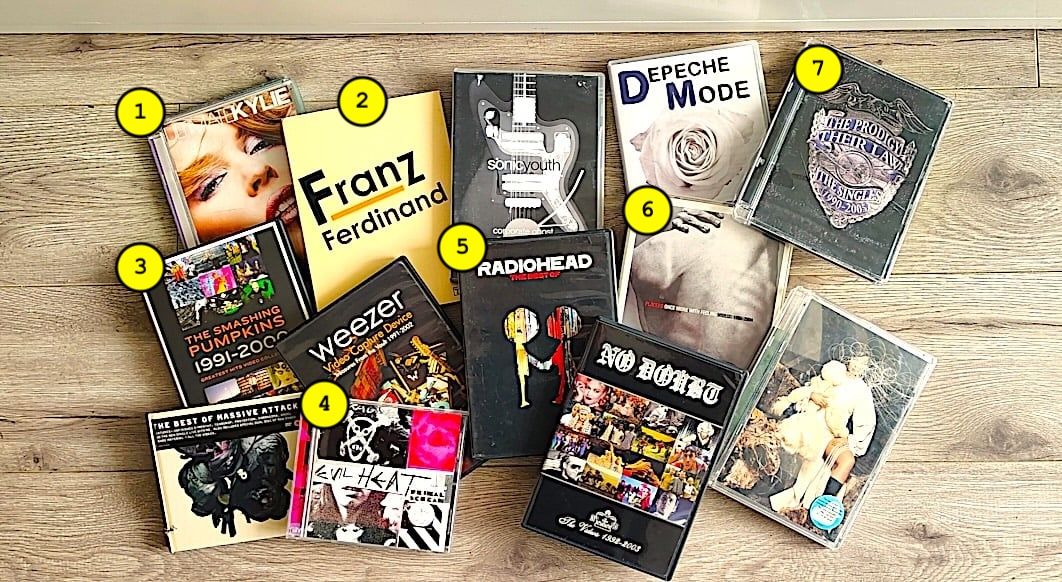
A smattering of DVDs from my collection
❌ missing video for 1997 single 'Some Kind of Bliss'
❌ Live DVD containing karaoke versions (???) of 2004 singles 'Take Me Out' and 'Dark of the Matinee', instead of music videos
❌ missing video for 1997 non-album track 'The End is the Beginning is the End'
✅ 'Evil Heat' album CD with bonus DVD containing 2 music videos from the album and 2002 V Festival performances
✅ Has video of 2003 track '2+2 = 5' which seems to be unavailable on Youtube in Canada
✅ Video for 1996 single '36 degrees' is in significantly better quality than the version on Youtube. Band commentary tracks on each video are a nice touch, full of the sort of factoids you'd see on VH1's Pop-Up Video.
✅ Refreshingly complete, compiling all their videos, including the BBFC-18 rated version of "Smack My Bitch Up" which, Limewire notwithstanding, was hard to obtain before this release. Also contains one of their best ever live performances, Brixton Academy 1997.
COPYRIGHTS & STUFF
About 15% of my Ersatz(M)TV library comes from my DVD collection, with the rest from online sources. I suppose it presents a copyright infringement issue. It bears mentioning though that such infringement has driven much of consumer tech adoption after the year 2000. Could the iPod have changed the world without the availability of billions of Limewire MP3s to max out its storage? Could early YouTube have gotten any traction without the hundreds of Simpsons, Family Guy and South Park clips it hosted? Could the $2.99 ringtone market have survived once smartphones made it trivial to chop up an MP3 stored on your phone to make your own?
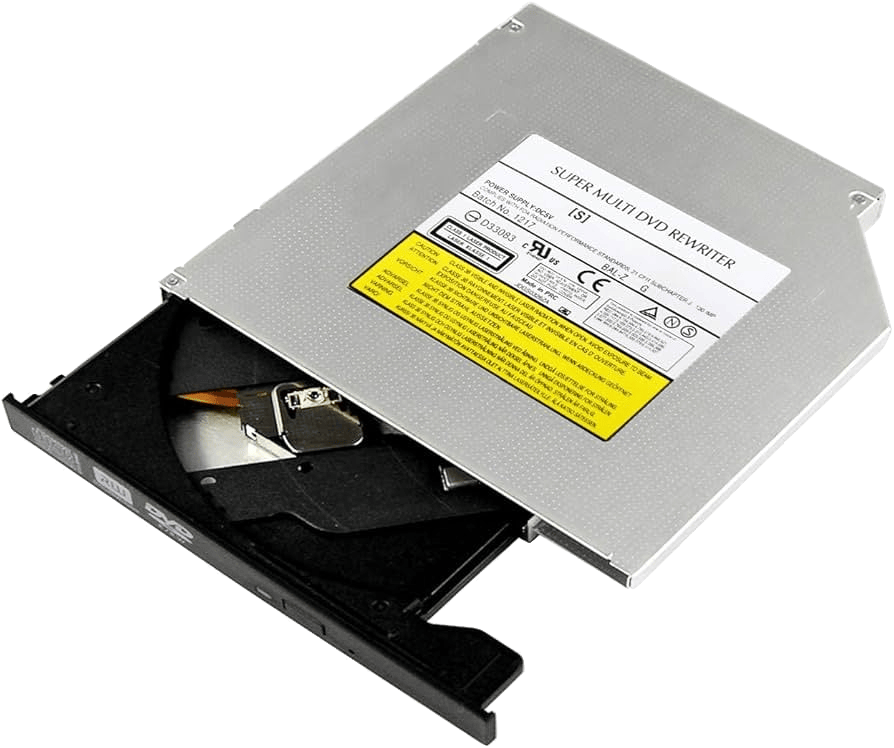
Let's put one of these in every computer made between 2003-2010. I'm sure no one will use them for nefarious purposes
Today, the hardware may be different but the principle is the same. Android-based gaming handhelds have sold millions of units, yet not one single person is using them to play Android games, which for over a decade have been infested with repetitive grind mechanics to maximize ad view time and incentivize micro-transactions needed to advance past a certain level. The one startup that tried to create a game console to actually play Android games (the ill-fated, ill-titled Ouya) crashed and burned in 2015 due to a total lack of market interest. No, these modern handhelds are being used to play emulated video games from consoles of yesteryear, anything from the original '80s Nintendo, the 00's PlayStation 2, all the way up to 2012's Wii U.

MIYOO MINI PLUS
This is happening partly because game emulation (usually stored as self-contained .iso disk images) provides a level of archival permanence that modern cloud distribution does not. If you bought a game, movie or music CD on a physical disc, it was yours for as long as the disc could be read. Today, music and movies get pulled off centralized streaming networks willy-nilly and game servers get taken offline with minimal notice, with no regard to whether people are still using them.
Cries of copyright infringement feel especially hollow now as every single purveyor of "AI solutions" has violated more EULAs and scraped more licensed media (without one of those pesky licences of course) to train its models, faster and at a larger scale than what any one individual ever could. You could have Limewire, qBittorrent and Soulseek running simultaneously from 2004 up until the heat death of the universe and you wouldn't get close.

FINAL THOUGHTS

I'm hardly the first person to have come up with the idea of a personal 24/7 music channel that works like TV. There's a website called MyRetroTVs that takes a feed of Youtube videos, nests it inside a TV frame PNG and plays it back from a random timestamp when you click a channel name. The video titles and playback sequence are invisible to the end-user, giving it that same serendipitous feel I was going for with ErsatzTV. More recently, with MTV's official demise, a developer has created a Vercel-hosted app called WantMyMTV focused purely on music videos, which at the time of writing, consists of Youtube embeds, and IMO doesn't feel as dynamic as MyRetroTVs.
The limitation with both of these options is that they're cloud-based, and could go kaput the moment Youtube changes its embed policies, or the developer doesn't want to pay the hosting bills anymore (a near-certainty considering Vercel's pricing). My ErsatzTV channels on the other hand pull from locally stored media, and playback is available on any device in my household (and if I ever get around to setting up a Tailscale instance, outside of it as well).
The permanence of this setup, and the low-latency, near-instantaneous playback creates a perfect "comfort TV" atmosphere and consistently reminds me of the enormously positive impact of music on my life.
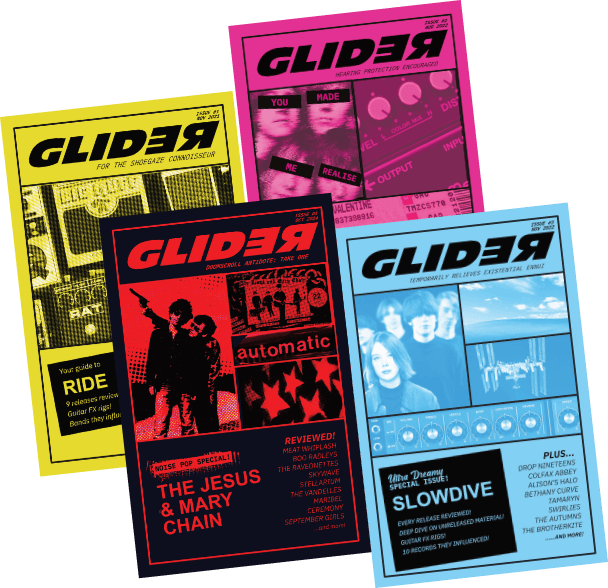
ZINES
p5JS
I have a few hobbies: web development (pages like this), abstract art (p5JS), writing record reviews and self-publishing music zines. The origins of each one can all be linked back to the colourful dynamism and artistic flourishes pulled from fragments of a thousand music videos floating around in my brain. For that, I have MTV to thank; and with ErsatzTV, I can look forward to having that for a long time to come.